

 Prices
 RECOVERY PACK
 Yanga
Yanga Business
 Bring a friend
 Invite your friend to workout
 🆕 HYROX trainings
 Group trainings
 Intro trainings
 Personal trainings
 All trainers
 Mision and values
 Rules
Rules All clubs
 Club occupancy
 News
News Career
New generation at the gym: trainer’s recommendations for teenagers and young adults.
Soon, another modern, new-generation LEMON GYM club will open its doors – designed and equipped with consideration for people of all age groups and their needs. Of course, when creating the spaces, attention was also given to the youngest group that will train here – teenagers. They are welcome at LEMON GYM clubs from the age of 14 and make up a significant share of gym-goers. The expectations and goals with which the youngest generation comes to the new-generation clubs are discussed by LEMON GYM and IMPULS group and personal training coach LEMON GYM and IMPULS trainer Andžej Gunevič.
According to the trainer, young people come to the gym driven by the desire to be strong and to look good:
“Young people usually focus their attention on strengthening and shaping one or a few specific body parts: boys on their arms and upper body, and girls want more defined glutes. Only a few are interested in overall full-body functionality. And the desire to show off in front of friends, to lift 100 kilograms, to have well-developed muscles at this age is completely normal – especially for a generation that gathers information from social media and influencers”.
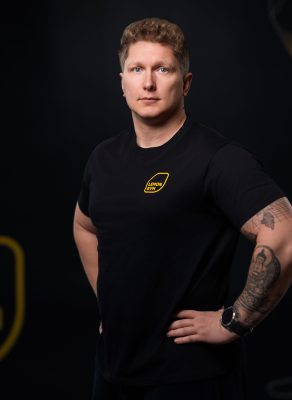
“It would be desirable for young people to rely less on exercises or movements seen on social networks and TikTok, and to have more courage to ask trainers for advice. For teenagers visiting a gym for the first time, a basic introduction to movement is essential, not everyone should be immediately allowed into weight machines or free weights areas. At this age, young people tend to be very self-confident and often train based on examples seen on TikTok. I am glad that social media encourages young people to move more, but not everyone is able to correctly replicate the movements they see. Often, such videos are made purely for effect and views, rather than to demonstrate correct and healthy movement. There are many nonsensical things that young people are eager to try, and those attempts do not always end successfully,” shares A. Gunevič from LEMON GYM and IMPULS.
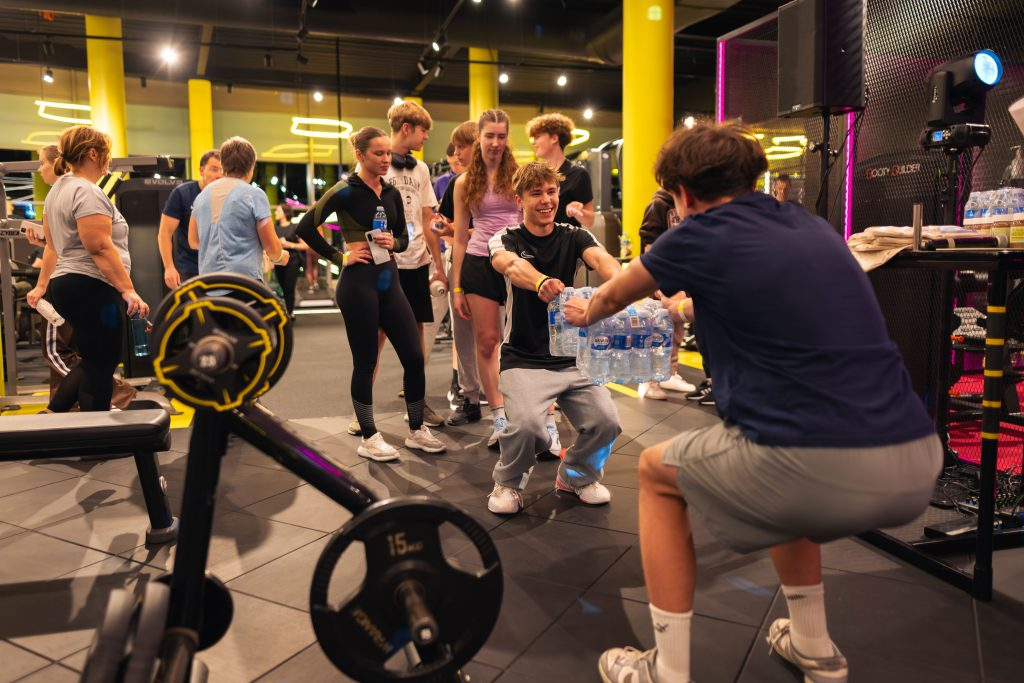
The trainer is pleased that new-generation clubs are offering larger spaces for gym machines and free weights, as well as areas for different types of training (functional training, boxing). According to A. Gunevič, it is very important for young people to see people of various ages working out – including their parents and even grandparents, as it sends a message that for a long and healthy life, sport and physical activity are essential components.
One of the key missions of a new-generation gym, according to the trainer, is also to encourage young people to exercise and explore different types of workouts, while at the same time educating them, teaching correct movement, and helping them understand that it is necessary to train not just individual body parts, but the whole body evenly, paying attention to posture, nutrition, and rest.
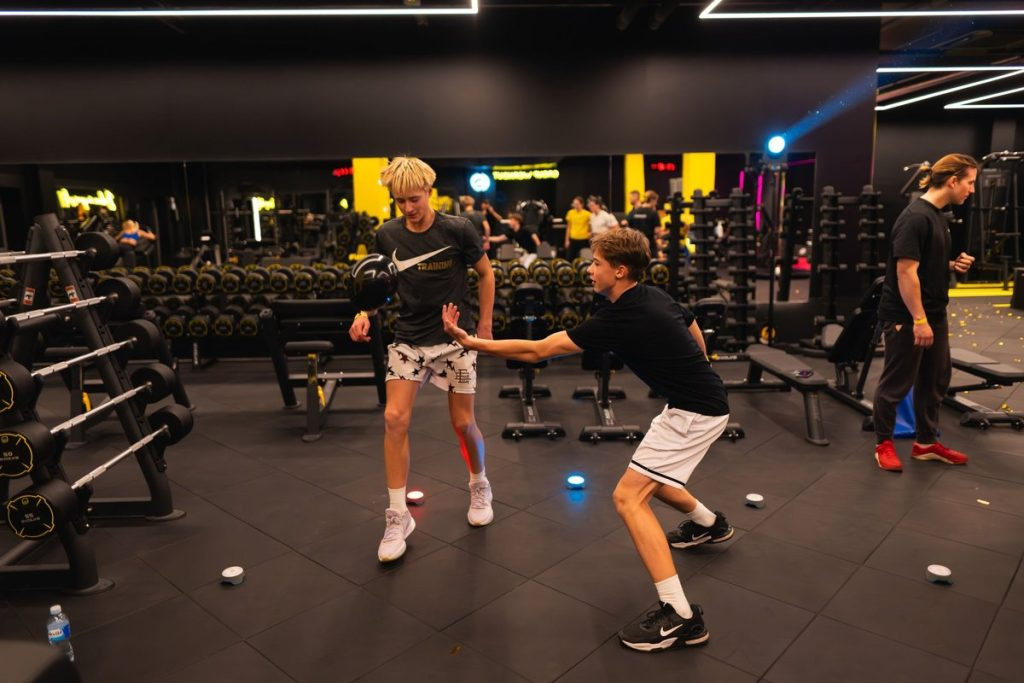
“My first piece of advice for a young person planning to start training at a gym is to consult a trainer or, even better, attend at least a few introductory sessions, where you will get familiar with both the equipment and the technique of basic movements. Even better – come to group training sessions designed for teenagers and young people. Training and competing with peers is much more enjoyable, and the workload during sessions will be distributed evenly. You will train according to a program that includes a variety of movements and helps you develop evenly, healthily, and purposefully,” the trainer encourages, urging people not to engage in self-directed training at gyms.
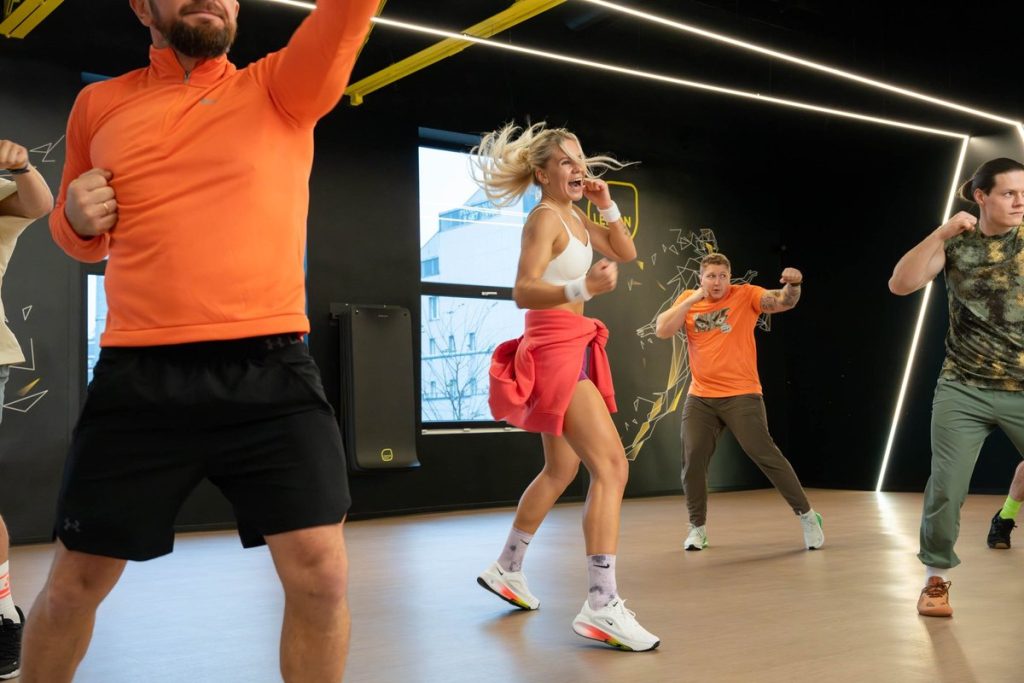
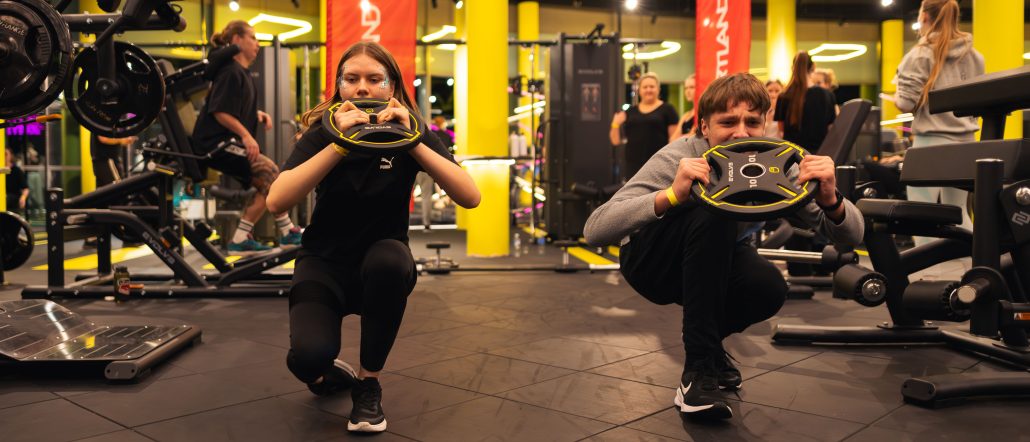
A. Gunevič leads sessions at LEMON GYM for teenagers aged 14–17 in small groups. There, they are taught what a proper workout should look like, how important warm-ups are, and the different types of exercises, not only strength training, but also cardio, mobility, and stretching.
“We start with lighter weights or just bodyweight exercises. Once one training cycle is mastered, we move on to another. We work with dumbbells and barbells, ride bikes, do jumps… there is no routine and plenty of variety, because this is very important for young people in order to maintain their attention and focus. These are functional workouts in the broadest sense, or as I call it strength and endurance training”.
The trainer also encourages parents to motivate their children to move more and take up sports. According to him, children and teenagers can handle significantly higher physical loads and recover more easily than adults. At the same time, they need physical activity because today’s young people spend a lot of time sitting and many hours in front of screens. Most also have poor posture and lack movement experience, so strengthening muscles and forming correct habits is very important.
“Two to three times per week is a good training routine, although at this age it is possible to train more often, as long as the physical load is reasonably dosed and distributed. For example, on Monday, Wednesday, and Friday you can do strength and endurance training, while on Tuesday and Thursday the movement is of a different type: cycling, swimming, mobility training, or even yoga and Pilates. I also want to debunk the myth that strength exercises with additional weights are not recommended for children and teenagers. Such exercises are necessary, but it is important to perform them correctly and choose the appropriate weight. In truth, very few can do this independently, so the role of a trainer or mentor is crucial, they can guide, direct, and prevent mistakes,” concludes A. Gunevič.